
Residential Asphalt Services in Northern Utah
A driveway you’ll be proud to pull into — built cleanly, honestly, and engineered to last in Northern Utah’s climate.
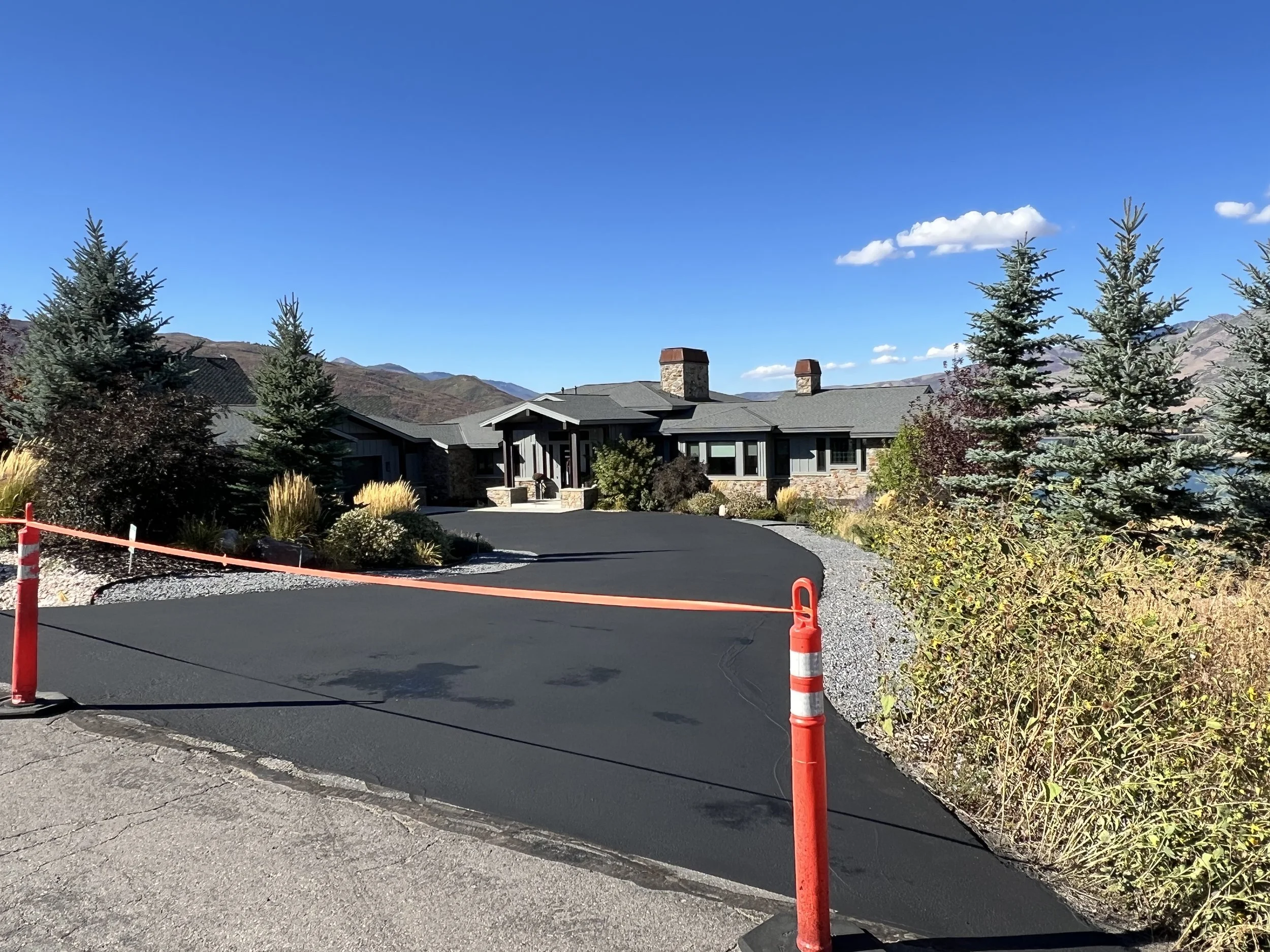
Freshly sealed residential asphalt driveway in Northern Utah, completed by Slate Canyon Asphalt. Clean edges, professional finish, and proper curing setup with cones and ribbon. This driveway showcases the high‑quality workmanship, climate‑engineered materials, and clean installation standards we deliver for homeowners throughout these service areas: Weber, Davis, Box Elder, Cache, Morgan, Salt Lake and Summit counties. To see how our services differ across all property types, visit our Property Types page.
What Homeowners Can Expect When Working with us
No pressure. No surprises. Just beautiful, long‑lasting results from licensed Utah asphalt professionals.
✔ Licensed B100 & E100 Contractor
✔ Clean, respectful crews
✔ No mess, no overspray, no sloppy edges
✔ Straightforward pricing — no upselling
✔ Built for freeze–thaw cycles & Utah soils
Homeowners choose Slate Canyon Asphalt because we make the entire experience simple, predictable, and stress‑free.
You get:
A clear, honest evaluation of your driveway
A straightforward plan — no pressure, no upselling
Respectful crews who protect your property
Clean workmanship with sharp edges and zero mess
On‑time work with updates throughout the project
A driveway that looks incredible and lasts years longer
We treat your home like it’s our own — and homeowners feel that difference immediately.
Residential Asphalt Services We Provide
Driveway Paving & New Asphalt Installation
We install new asphalt driveways with proper grading, base preparation, and commercial‑grade compaction to ensure long‑term performance. Our paving process is engineered for Northern Utah’s freeze–thaw cycles, helping your driveway resist cracking, settling, and premature wear. New driveways pair well with routine sealcoating and crack sealing to maximize lifespan and protect against seasonal weather conditions.
Driveway Crack Sealing
Cracks allow water to penetrate the base and cause further damage, especially during Northern Utah’s freeze–thaw cycles. We use hot‑applied crack sealant to prevent water intrusion, slow deterioration, and protect the surrounding pavement from spreading cracks and structural failure. Crack sealing is one of the most effective and affordable ways to extend the life of your driveway, and it should be part of every homeowner’s routine asphalt maintenance plan. When combined with sealcoating and periodic asphalt repair, crack sealing helps prevent potholes, base erosion, and early driveway replacement.
Private Road & Rural Driveway Asphalt Services
We provide asphalt paving, resurfacing, and maintenance for private roads, long rural driveways, shared access lanes, and private communities. These areas often experience heavier vehicle loads, drainage challenges, and more severe freeze–thaw cycles. Our engineered approach includes proper grading, base stabilization, and long‑term maintenance planning to ensure reliable performance. Private roads benefit from routine crack sealing, sealcoating, and periodic asphalt repair to prevent costly reconstruction.
Driveway Sealcoating
Sealcoating protects your driveway from UV exposure, oxidation, moisture, and daily wear caused by vehicles and snow removal. A properly sealed driveway lasts longer, looks better, and stays protected from the elements that cause fading, cracking, and surface deterioration. We use commercial‑grade materials to restore the deep black finish and create a uniform, premium appearance. Sealcoating works best when paired with crack sealing and routine asphalt maintenance, helping homeowners prevent water intrusion, reduce long‑term repair costs, and maintain strong curb appeal year‑round.
Driveway Repair, Patching & Minor Fixes
Localized failures such as potholes, soft spots, and edge breakdowns can be repaired with asphalt patching to restore structural integrity and prevent further damage. Our engineered patching process includes clean saw‑cuts, base reconstruction, and commercial‑grade compaction to ensure long‑lasting performance. Patching is ideal for driveways with isolated failures, drainage issues, or damage caused by snow removal or heavy vehicles.
Driveway Replacement & Resurfacing
When a driveway has widespread cracking, alligator cracking, or structural failure, replacement or resurfacing may be the best long‑term solution. We remove failed asphalt, rebuild the base as needed, and install new hot‑mix asphalt for a clean, durable finish. For driveways with moderate wear, resurfacing can restore appearance and performance at a lower cost than full replacement. We evaluate each property to determine whether asphalt paving, resurfacing, or asphalt repair will provide the best results.
Why Residential Asphalt Maintenance Matters
Protects Against Freeze–Thaw Damage
Northern Utah’s freeze–thaw cycles are the leading cause of driveway cracking, potholes, and surface failure. As temperatures swing, the asphalt expands and contracts, creating stress that weakens the pavement. Routine maintenance — especially crack sealing and sealcoating — keeps moisture out of the asphalt and prevents freeze‑expansion from damaging the base. Protecting your driveway from seasonal movement is the most effective way to avoid costly repairs and extend pavement life
Extends Pavement Life by 10–15 Years
Routine maintenance dramatically increases the lifespan of your driveway. Crack sealing, sealcoating, and minor repairs protect the asphalt binder from UV damage, oxidation, and moisture intrusion — the main causes of early pavement failure. In Northern Utah’s climate, a maintained driveway can last 25–30 years, while neglected asphalt often fails in half that time. Consistent care keeps the pavement flexible, prevents structural issues, and saves homeowners thousands over the life of the driveway.
Prevents Water Intrusion & Base Failure
Water is the most destructive force in residential asphalt. Once moisture reaches the base, it weakens the structure and leads to potholes, sinking, and alligator cracking. Keeping cracks sealed and the surface protected is the best way to prevent water from penetrating the pavement. A strong sealcoat layer acts as a barrier against rain, snowmelt, and de‑icing chemicals. Protecting the base is the key to long‑term driveway performance and avoiding full‑depth replacement.
Improves Curb Appeal & Home Value
A clean, well‑maintained driveway instantly boosts curb appeal and makes your home look newer and more cared for. Fresh sealcoat restores the deep black finish, hides minor imperfections, and creates a uniform, premium appearance. For homeowners preparing to sell, a maintained driveway reduces inspection concerns and increases perceived property value. Regular maintenance keeps your driveway looking sharp and prevents the patchwork look that comes from delayed repairs.
Why Choose Slate Canyon Asphalt
Licensed, Insured & Built the Right Way
Your driveway is a major part of your home — it deserves more than guesswork. As a licensed B100/E100 contractor, we build every driveway with proper grading, compaction, and drainage so it lasts longer and performs better. Homeowners get fully insured, code‑compliant work done the right way from day one.
Clean, Professional Work You Can Feel Good About
We show up on time, protect your property, and leave everything clean. No overspray, no sloppy edges, no mess. Just a sharp, smooth, professionally finished driveway you’ll be proud to pull into.
Clear Communication & Honest Pricing
No pressure. No upselling. No surprises. You get a clear plan, straightforward pricing, and simple explanations of what your driveway actually needs — so you always feel informed and in control.
Engineered for Northern Utah’s Climate
Utah’s freeze–thaw cycles, clay‑heavy soils, and intense UV exposure are tough on asphalt. We design every driveway specifically for these conditions, giving you longer‑lasting pavement and fewer repairs over the years.
Engineered for Northern Utah’s Climate
Driveways in Northern Utah face unique environmental stress — from winter freezes to summer heat. Our residential asphalt services are built to handle these conditions, helping homeowners protect their pavement and avoid unnecessary repairs. Whether you need driveway paving, driveway resurfacing, or routine asphalt maintenance, we deliver long‑lasting results built for real‑world conditions.
Residential Asphalt Service Areas
We provide residential driveway paving, resurfacing, crack sealing, sealcoating, and asphalt repair services throughout Weber, Davis, Salt Lake, Box Elder, Morgan, Cache, and Summit counties. Our team supports single‑family homes, rural properties, private roads, shared driveways, and multi‑unit residences across Northern Utah. Whether you need a new driveway, a full replacement, or routine asphalt maintenance, we deliver engineered residential solutions designed for the region’s UV exposure, freeze–thaw cycles, clay‑heavy soils, and seasonal weather demands. We provide asphalt solutions for all major property types across Northern Utah. Explore our full Property Types overview to see how we tailor services for commercial, HOA, multi‑unit, residential, and parking lot needs.
Primary Residential Asphalt Service Areas Include:
Ogden • Layton • Farmington • Bountiful • Salt Lake City • Park City • Logan • Brigham City • Morgan • Kaysville • Syracuse • North Salt Lake • Huntsville & Eden • Mountain Green
REQUEST AN ESTIMATE
If your driveway or private road needs paving or maintenance, we can take a look and give you a straightforward plan.
No pressure — just clear information and a realistic scope.

Residential Asphalt Services FAQ
-
A properly installed asphalt driveway typically lasts 20–25 years in Northern Utah when it’s maintained with routine sealcoating, crack sealing, and minor repairs. Our region’s freeze–thaw cycles, snow removal, and intense UV exposure all impact lifespan by accelerating oxidation and surface wear. The biggest factor in long‑term performance is the quality of the base, compaction, and drainage during installation — if the foundation is engineered correctly, the asphalt can handle seasonal expansion and contraction without cracking or settling. With consistent maintenance, most homeowners can significantly extend the life of their driveway and avoid premature replacement
-
Most residential driveways in Northern Utah should be sealcoated every 2–3 years, depending on sun exposure, traffic, and weather conditions. Our region’s freeze–thaw cycles and dry freezes accelerate oxidation and surface wear, making routine sealcoating especially important. A fresh sealcoat protects the asphalt binder from UV damage, moisture intrusion, and chemical exposure while keeping the surface flexible enough to handle seasonal expansion and contraction. Regular sealcoating also slows the formation of small cracks, helping prevent water from reaching the base and causing long‑term structural issues. When combined with timely crack sealing, sealcoating is one of the most effective ways to extend the life of your driveway
-
Yes. Most driveway cracks can be repaired using hot‑applied crack sealing, which prevents water from penetrating the asphalt and reaching the base layer. In Northern Utah, freeze–thaw cycles make early crack repair especially important — once moisture enters a crack and freezes, it expands and widens the damage. Over time, this leads to potholes, surface separation, and structural failures. Proper crack sealing restores flexibility to the pavement surface, slows further deterioration, and extends the life of your driveway. Addressing cracks early is one of the most cost‑effective ways to protect your asphalt and avoid larger repairs.
-
If your driveway has a solid, stable base and the damage is mostly surface‑level — such as oxidation, minor cracking, or light wear — resurfacing or an asphalt overlay is often the most cost‑effective option. Overlays restore appearance, improve ride quality, and add years of life without the expense of full reconstruction. However, if the base is failing, the driveway is sinking, or there are widespread structural cracks, full replacement is usually the better long‑term solution. Northern Utah’s freeze–thaw cycles make base issues worse over time, so we evaluate drainage, compaction, and subgrade stability to recommend whether resurfacing or full replacement will give you the best results.
-
Potholes form when water penetrates the asphalt surface, reaches the base, and weakens the underlying structure. In Northern Utah, freeze–thaw cycles accelerate this process — moisture freezes, expands, and forces the pavement upward, then thaws and collapses, creating voids that eventually break through the surface. Heavy vehicles, poor drainage, and delayed crack repair also contribute to pothole formation. Addressing cracks early and maintaining a strong sealcoat layer helps prevent water intrusion. When potholes do appear, timely asphalt patching restores structural integrity and prevents the damage from spreading.
-
Preventing potholes and major cracking starts with keeping water out of the pavement structure. Routine crack sealing stops moisture from reaching the base, while sealcoating protects the asphalt binder from UV damage and oxidation. In Northern Utah, freeze–thaw cycles make early maintenance especially important — even small cracks can expand rapidly once water freezes inside them. Proper drainage, avoiding heavy vehicles during hot weather, and repairing low spots also help prevent structural failures. A consistent maintenance schedule is the most effective way to avoid costly repairs and extend driveway life.
-
A well‑maintained asphalt driveway typically needs periodic sealcoating, timely crack sealing, and occasional patching to address localized damage. Sweeping debris, clearing edges, and keeping drainage paths open help prevent moisture buildup and surface wear. In Northern Utah, freeze–thaw cycles and UV exposure accelerate aging, so maintaining a protective sealcoat layer is especially important. Addressing cracks early prevents water from reaching the base and causing potholes or structural issues. Most homeowners benefit from a maintenance review every 2–3 years to keep the driveway performing well long‑term.
-
The best time to pave or sealcoat a driveway in Northern Utah is typically late spring through early fall, when temperatures are warm enough for proper curing. Asphalt compacts and bonds best when daytime temperatures are consistently above 50°F. Sealcoat also requires dry conditions and adequate warmth to cure correctly. Early summer and early fall often provide the most stable weather windows. While paving can be done in cooler temperatures with the right equipment, sealcoating should be avoided during cold nights, rain, or high humidity to ensure long‑term durability.
-
Most new asphalt driveways can handle light vehicle traffic after 24–48 hours, depending on temperature and weather conditions. Asphalt remains soft during the initial curing phase, so hot days, direct sun, or heavy vehicles can leave marks if used too early. Full curing takes several weeks, but normal residential use is typically safe within the first couple of days. In Northern Utah, cooler temperatures often help the surface firm up faster, while summer heat may require a longer wait. Avoid parking heavy trucks, trailers, or equipment on the driveway for the first 5–7 days to prevent scarring or depressions. Proper curing helps ensure long‑term durability and reduces the risk of early surface damage.
-
Asphalt driveways crack for several reasons, but in Northern Utah the biggest factors are freeze–thaw cycles, water intrusion, UV exposure, and natural pavement movement. When moisture enters small surface cracks and freezes, it expands and forces the asphalt apart, turning minor cracks into larger structural issues. UV exposure dries out the asphalt binder over time, making the surface more brittle and prone to splitting. Heavy vehicles, soil movement, and improper drainage can also contribute to cracking. Routine maintenance — especially timely crack sealing and periodic sealcoating — helps slow this process, protect the base, and extend the overall life of your driveway.
-
Yes. We provide residential asphalt services throughout Weber, Davis, Box Elder, Morgan, Cache, Summit, and Salt Lake counties areas, including Ogden, Layton, Logan, Park City, Morgan and Salt Lake City. Our crews work across Northern Utah’s diverse soil conditions and elevations, from valley neighborhoods to mountain‑area properties, ensuring each driveway is built for local freeze–thaw cycles and seasonal weather. Whether you need driveway paving, resurfacing, sealcoating, or crack sealing, we can evaluate your property and recommend the right approach for long‑lasting results.
-
Yes. We provide no‑pressure, straightforward estimates with clear scopes and realistic timelines. During the evaluation, we look at the driveway’s base condition, drainage, slope, and overall pavement health so you know exactly what your driveway needs — no upselling and no surprises. Our goal is to give homeowners clear, accurate information about whether paving, resurfacing, sealcoating, or crack sealing is the right approach. Every estimate includes a transparent breakdown of recommended work and expected lifespan so you can make an informed decision.
-
Protecting your driveway in winter starts with sealing cracks before temperatures drop, preventing water from entering the pavement and freezing. Avoid using metal shovels that can gouge the surface, and choose de‑icers that are safe for asphalt — calcium magnesium acetate is a good option. Keep the driveway clear of snow to reduce freeze–thaw stress, and avoid parking heavy vehicles in the same spot for long periods. Maintaining a strong sealcoat layer helps shield the asphalt from moisture and salt exposure. Proper winter care significantly reduces cracking and extends pavement life.
-
Asphalt and concrete both perform well, but asphalt is generally better suited for Northern Utah’s freeze–thaw climate. Asphalt remains flexible, allowing it to expand and contract with temperature changes without cracking as easily as concrete. It also warms faster in winter, helping snow and ice melt more quickly. Asphalt repairs are simpler and more cost‑effective, and resurfacing can extend its lifespan without full replacement. Concrete can last longer in stable climates, but in Utah’s conditions, asphalt typically offers better long‑term value, lower maintenance costs, and easier repair options for homeowners.
-
Most residential asphalt driveways in Northern Utah perform best with 2.5–3 inches of compacted asphalt over a properly prepared base. The base is the most important factor — typically 4–6 inches of compacted road base, depending on soil conditions, slope, and drainage. In freeze–thaw regions, a stronger base helps prevent settling, cracking, and heaving. Thicker asphalt may be recommended for steep driveways, heavy vehicles, RV parking, or trailer use. During an on‑site evaluation, we measure soil stability, traffic needs, and drainage to determine the ideal thickness for long‑term performance.
-
A typical installation begins with removing old pavement (if needed), grading the area, and building a stable, compacted base. Proper drainage is established to prevent water from pooling or reaching the subgrade. Once the base is set, hot‑mix asphalt is placed, leveled, and compacted to the correct thickness. Most driveways can be completed in one day, with light vehicle use allowed after 24–48 hours. We provide clear communication throughout the process so homeowners know what to expect, how long curing will take, and how to care for the new surface during the first week