
How to Choose the Right Sealcoating Contractor in Northern Utah — A Property Manager's Guide
If you manage a commercial property, HOA community, or multi-unit development in Northern Utah, you've probably received at least a few sealcoating quotes that varied wildly in price, scope, and professionalism. Choosing the wrong contractor doesn't just waste money — it can leave your pavement worse than before, void warranties on new asphalt, or create liability issues on your property.
This guide gives property managers, HOA boards, and facilities managers a practical framework for evaluating sealcoating contractors in Northern Utah — what to look for, what questions to ask, and what separates commercial-grade work from shortcuts that fail within a season.
Why Sealcoating Quality Varies So Much
Sealcoating looks simple from the outside. A crew shows up, sprays or squeegees a dark coating on the pavement, and leaves. The surface looks great for a few weeks regardless of whether the work was done correctly.
The difference between a quality job and a poor one doesn't show up immediately — it shows up the following spring after Northern Utah's freeze-thaw cycles have done their work. A properly applied commercial sealcoat lasts 2-4 years and maintains its protective properties throughout. A poorly applied job — wrong dilution ratio, applied in bad weather, over dirty or cracked pavement, or using substandard materials — fails within one season, peels, and can actually trap moisture that accelerates the damage it was supposed to prevent.
For property managers responsible for maintaining pavement assets worth hundreds of thousands of dollars, understanding what separates good work from bad work is essential.
The Five Things That Determine Sealcoating Quality
1. Material Quality and Dilution Ratio
Commercial sealcoating material comes in two primary types — refined coal tar emulsion and asphalt emulsion. Both are appropriate for Northern Utah's climate when applied correctly. The critical variable is dilution.
Manufacturers specify maximum water dilution ratios for their products — typically no more than 30% water by volume for a two-coat application. Some contractors dilute beyond manufacturer specifications to reduce material costs, producing a thinner coating that looks identical when wet but provides significantly less protection once cured.
What to ask: Request the material safety data sheet or product specification for the sealcoat they plan to use. Ask specifically what dilution ratio they apply. A contractor unwilling to answer this question is a red flag.
What good looks like: A reputable contractor uses undiluted or minimally diluted material from a recognized manufacturer and can tell you exactly what product they're applying and at what ratio.
2. Surface Preparation
Sealcoating applied over a dirty, oily, or cracked surface will fail prematurely regardless of material quality. Proper preparation is what separates professional commercial work from low-bid shortcuts.
What proper preparation includes:
Blowing or sweeping the entire surface to remove loose debris, sand, and vegetation
Cleaning oil spots with a degreaser and applying oil spot primer — untreated oil spots prevent sealcoat adhesion and create bubbling and peeling within weeks
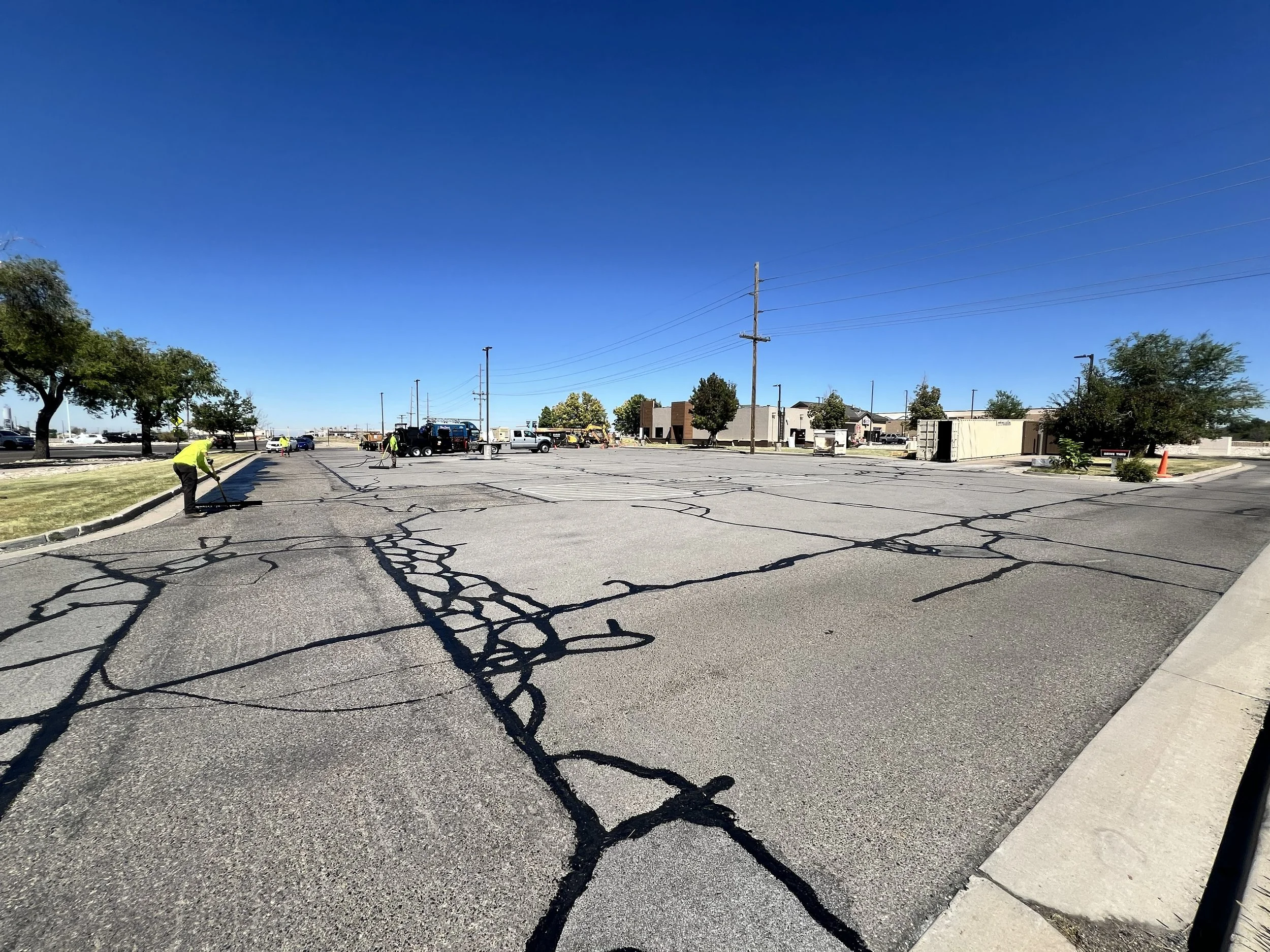
Crack sealing all cracks wider than ¼ inch before any sealcoating begins — sealcoating over open cracks traps moisture and defeats the purpose of the treatment
Addressing any structural failures — potholes and alligator cracking need to be patched before sealcoating
What to ask: Ask the contractor to walk your property with you and describe exactly what preparation work they'll perform before application begins. If they don't mention oil spot treatment or crack sealing as part of their process, ask why.
What good looks like: A professional contractor treats surface preparation as non-negotiable and includes it in the scope of work, not as an optional add-on.
3. Application Method and Equipment
For commercial parking lots, HOA communities, and large residential properties, spray application is the professional standard. Spray equipment applies sealcoat at a consistent thickness across the entire surface, reaching into surface voids and providing uniform coverage that hand squeegee application can't match on large areas.
Squeegee application is appropriate for smaller surfaces, tight areas around obstacles, and second-coat touchup work. A contractor using only squeegee application on a large commercial parking lot is using residential-grade methods on a commercial project.
What to ask: Ask what application equipment they use and why. Ask whether they spray, squeegee, or use a combination approach and how they decide which to use on your specific property.
What good looks like: Commercial contractors have truck-mounted spray equipment for large surface areas and use squeegees for detail work and edging.
4. Weather and Temperature Conditions
Sealcoating applied in the wrong conditions fails — period. The application window in Northern Utah is May through September, with specific daily conditions required for proper curing.
Minimum requirements for proper sealcoat application:
Air and pavement temperature above 50°F at application and for at least 8 hours after
No rain forecast for 24-48 hours after application
No application in direct sunlight on surfaces above 90°F — flash drying prevents proper penetration
Low humidity conditions preferred for fastest cure
Contractors who apply sealcoating in marginal conditions to hit a deadline or squeeze in additional jobs before weather changes are compromising the quality of your project.
What to ask: Ask how they handle weather delays and what their policy is if conditions change after work has started. A professional contractor monitors weather closely and reschedules rather than applies in marginal conditions.
What good looks like: A reputable contractor communicates proactively about weather windows and doesn't pressure you to proceed in questionable conditions.
5. Licensing and Insurance
This is non-negotiable for commercial properties and HOA communities in Utah.
Utah contractor licensing: Any contractor performing commercial asphalt maintenance work in Utah should hold a B100 General Building Contractor or E100 General Engineering Contractor license issued by the Utah Division of Occupational and Professional Licensing. You can verify any contractor's license at the DOPL website. Unlicensed contractors have no accountability mechanism and leave you exposed to liability if something goes wrong on your property.
Insurance: Require certificates of general liability insurance ($1,000,000 per occurrence minimum) and workers' compensation coverage before allowing any contractor on your property. If a worker is injured on your property and the contractor doesn't carry workers' compensation, you may be liable.
What to ask: Request a copy of their contractor license number and certificates of insurance before signing any contract. A legitimate commercial contractor provides these immediately without hesitation.
What good looks like: Licensed, insured contractors hand you their credentials proactively. They don't make you chase them down.
Red Flags to Watch For
After reviewing dozens of sealcoating bids for commercial properties across Northern Utah, here are the most common warning signs of a contractor likely to deliver substandard work:
Significantly lower price than all other bids — material and labor costs for commercial sealcoating don't vary that dramatically between legitimate contractors. A bid 40-50% below the market rate typically means diluted materials, skipped preparation steps, or an unlicensed operator with no overhead or insurance.
No mention of crack sealing or surface preparation in the scope — any bid that goes straight to sealcoating without addressing existing cracks and surface contamination is either cutting corners or expecting you not to notice.
Pressure to sign immediately — legitimate contractors are busy but not desperate. High-pressure tactics to sign before you can get other quotes or verify credentials are a warning sign.
No written contract or scope of work — verbal agreements for commercial property work are not appropriate. A professional contractor provides a written proposal specifying materials, preparation, application method, number of coats, and warranty terms.
Door-to-door or unsolicited bidding — contractors who show up at your property uninvited claiming they "have leftover material from a nearby job" are almost always using low-quality or improperly stored materials and cutting every corner possible.
What to Expect From a Professional Sealcoating Proposal
A professional sealcoating proposal for a commercial property or HOA community should include:
Property address and total square footage
Scope of preparatory work — crack sealing, oil spot treatment, cleaning
Sealcoat material specification — product name, manufacturer, dilution ratio
Application method — spray, squeegee, or combination
Number of coats
Cure time and traffic re-entry timeline
Total price with any conditional items clearly identified
Contractor license number and insurance certificate
Warranty terms if applicable
If a bid is missing any of these elements, ask for them in writing before proceeding.
Slate Canyon Asphalt — Commercial Sealcoating for Northern Utah
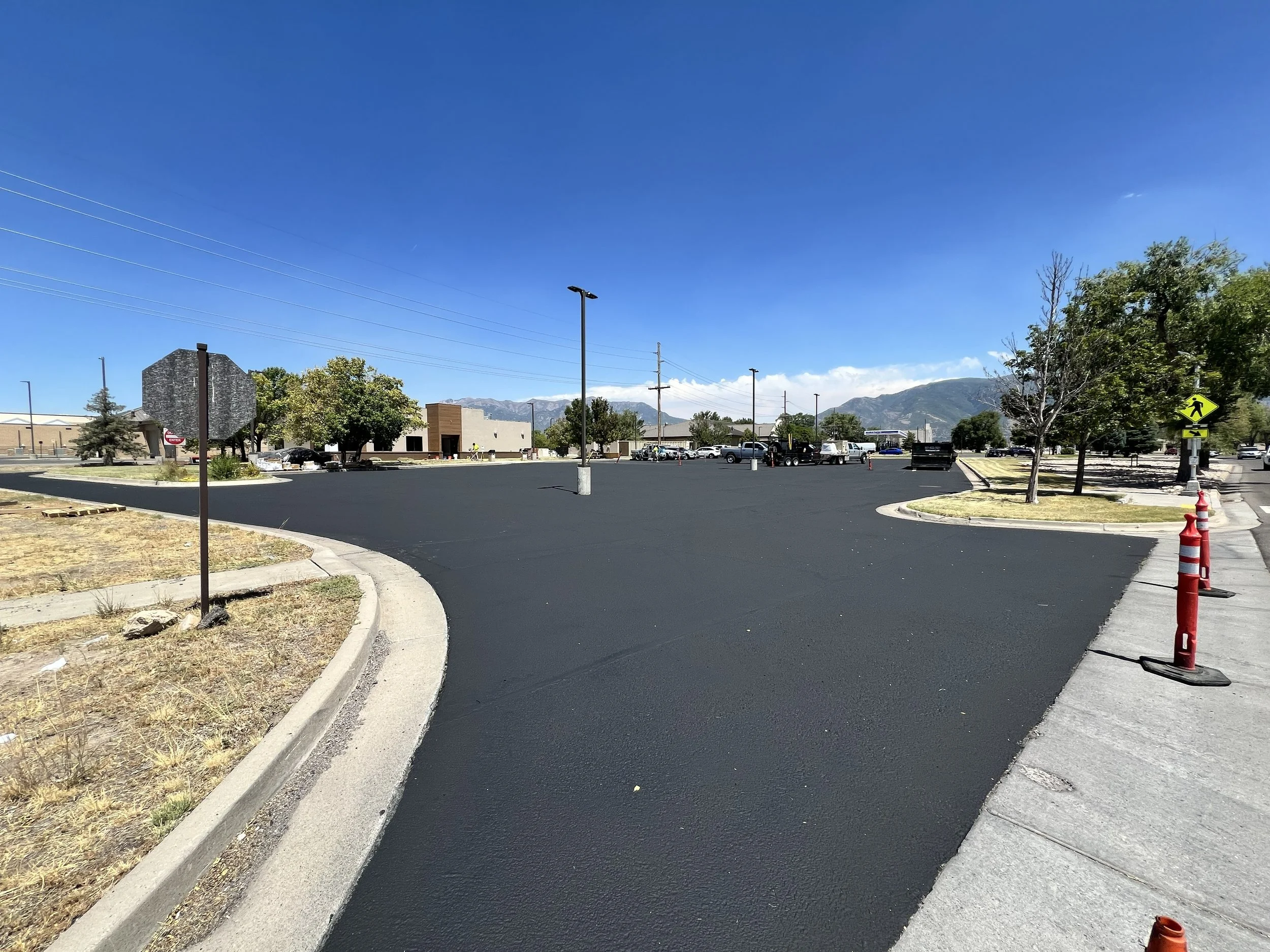
Slate Canyon Asphalt provides commercial-grade sealcoating for parking lots, HOA communities, multi-unit properties, industrial facilities, and residential driveways across Northern Utah. We hold Utah B100 and E100 contractor licenses, carry full commercial insurance, and use commercial spray equipment and properly specified materials on every project.
Every sealcoating project includes a full surface assessment, crack sealing of existing cracks, oil spot treatment, and two-coat spray application using commercial-grade sealcoat at manufacturer-specified dilution ratios. We provide written proposals with complete material and scope specifications, and we communicate proactively about weather windows and scheduling.
Free on-site estimates are available for all commercial and HOA sealcoating projects across Weber, Davis, Box Elder, Cache, Morgan, Summit, and Salt Lake counties. Call (801) 845-2190 or request an estimate online. We respond the same business day.
Related pages: